Conférence MoCA #23 :
De JAMA à GUIDE : 20 ans de parcours pour faire progresser les soins aux personnes atteintes de démence (Malaz Boustani, MD, MPH) - jeudi 5 juin 2025, 12 h 00 HAE


MoCA Cognition provides a structured training pathway to ensure the MoCA test is administered and interpreted with accuracy and confidence.
Le module d'une heure a été conçu pour favoriser la standardisation et la précision
Acquérir des connaissances applicables sur la neuroanatomie et les domaines cognitifs évalués par le MoCA
Devenez plus confiant en administrant le MoCA et en expliquant les résultats aux patients et à leurs familles
Recevez une preuve de certification avec un numéro d'identification de certification MoCA unique
> 20 % d'augmentation des compétences après avoir obtenu la certification MoCA
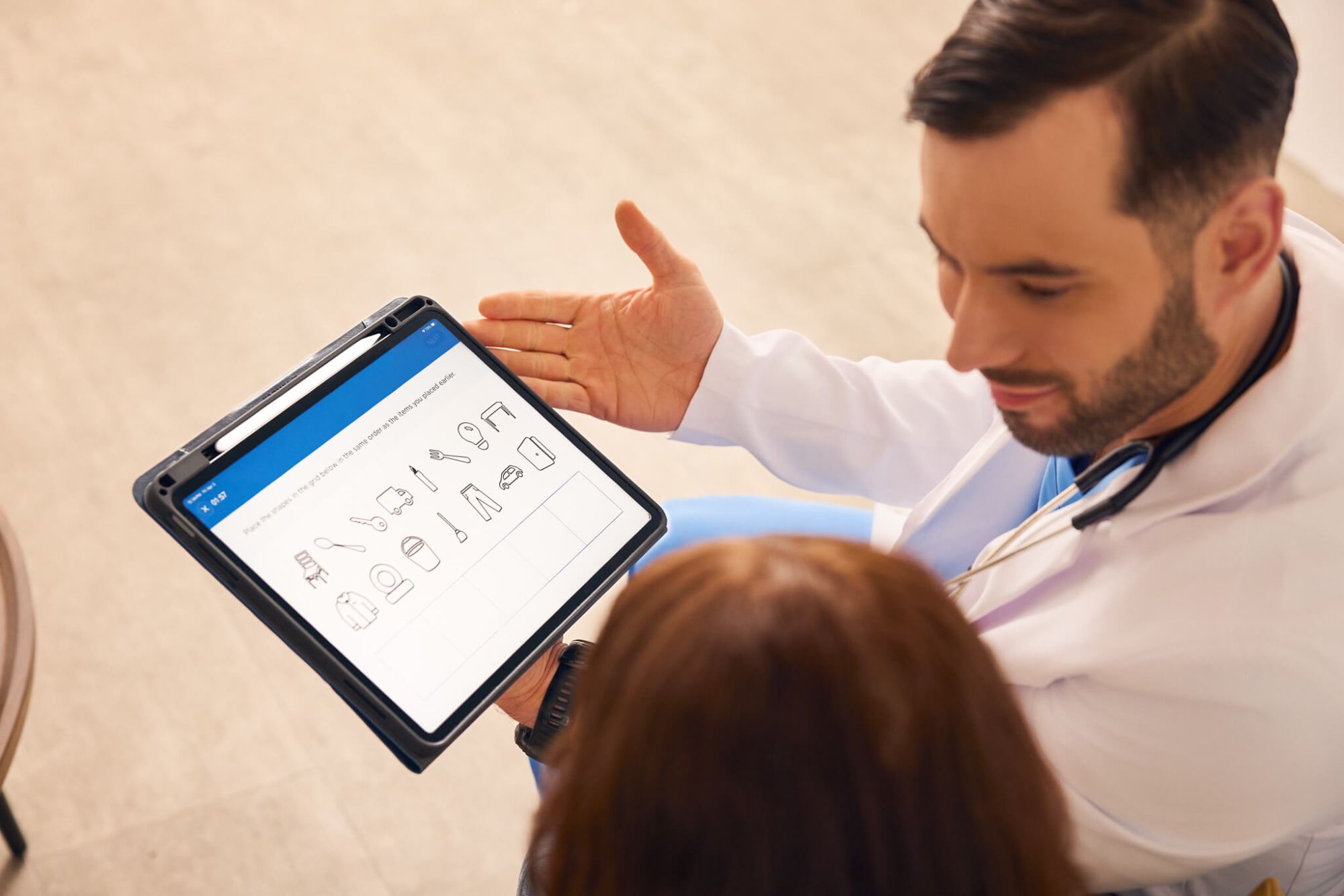
Upon successful completion, participants receive an official certificate and a unique MoCA ID number. Certified status is automatically linked to administered tests, supporting standardization and quality assurance across clinical and research settings.
Participants will:
Completion of this training is mandatory for certain clinicians and researchers administering paper-based MoCA assessments. Evidence shows a significant improvement in scoring proficiency following certification, reinforcing its role in maintaining high standards of use.
The Training & Certification program is offered free of charge to students, faculty members, academic researchers, and professionals working in publicly funded healthcare institutions (proof of status required).
This module presents 12 carefully constructed clinical cases, each featuring a fictional patient. Participants will review MoCA Test results alongside complementary diagnostic data to formulate a clinical impression.
The focus is on recognizing characteristic cognitive profiles associated with Alzheimer’s disease and differentiating them from other neurological conditions. Emphasis is placed on pattern recognition, clinical reasoning, and interpretation of cognitive testing within a broader diagnostic context.
This module includes 7 clinical cases designed to strengthen diagnostic accuracy in complex presentations. Participants will evaluate patient history, MoCA Test performance, and additional investigations to identify conditions that may mimic Alzheimer’s disease.
The training emphasizes differential diagnosis, equipping clinicians to distinguish Alzheimer’s disease from other cognitive disorders through systematic interpretation of clinical and cognitive data. Participants will refine their ability to recognize overlapping symptomatology and avoid common diagnostic pitfalls.
Through 6 clinically relevant cases, this module explores the intersection of cognitive impairment and driving safety. Participants will review patient histories, MoCA Test results, and supporting assessments to determine fitness to drive.
The module focuses on how cognitive deficits; particularly those identified through the MoCA Test; translate into real-world functional risks. Clinicians will develop practical frameworks for integrating cognitive screening into driving recommendations and medico-legal decision-making.
This module follows the case of Ruth, a fictional 67-year-old woman undergoing a formal capacity evaluation. Through her clinical journey, participants gain insight into the structured process of assessing decision-making capacity.
The module highlights the clinician’s role in evaluating functional abilities, ethical considerations, and the application of standardized approaches to capacity assessment. It provides a practical, case-based framework for conducting and documenting capacity evaluations in clinical practice.